About The Project
An independent research initiative dedicated to the reconstruction of erased Palestinian landscapes through immersive reality pipelines, investigative architecture, and spatial documentation.
Investigating Internal Architecture
The analytical focus moves past standard external binaries to explicitly map the internal fragmentation and spatial social engineering within technocratic centers and enclaves. By exposing these hidden models, it documents how architectural infrastructure is weaponized over time.
Overcoming Documentation Failures
Traditional archives frequently collapse under the mass weight of documentation, resulting in systemic fatigue and institutional stagnation. It designs information architectures that transform loose, exhaustive testimonial records into organized, responsive verification engines.
Forensic Humanities Pipelines
By utilizing advanced digital artistic tools, chronological cartography, and Blender-driven 3D environments, the project returns abstract data to physical landscape coordinates. Virtual reality acts as the permanent, spatial container for historical preservation and witness validation.
ExhB & Recognition
Our research, spatial models, and forensic methodology have been presented across international academic spaces, human rights forums, and cultural exhibitions, advancing the practice of immersive cartographic documentation.
Academic Literature
Our core theoretical frameworks, including investigations into the geography of war crimes and spatial engineering within enclaves, are preserved in rigorous academic publications.
Spatial Installations
By translating raw archival fragments and data points into public visual environments, our interactive models and 3D architectural spaces allow global audiences to directly encounter, navigate, and witness reconstructed geographies.
Methodological Impact
Our platform functions at the vital intersection of human rights advocacy and immersive tech. This cross-disciplinary approach has earned recognition for effectively turning complex testimonial files into dynamic, verifiable, and permanent structural records.
Major Laurels & Exhibitions
S+T+ARTS Prize 2024
Selected by an international jury for high-level artistic exploration and technical innovation connecting Science, Technology, and the Arts.
Inspect S+T+ARTS Dossier ↗Ars Electronica Festival 2024
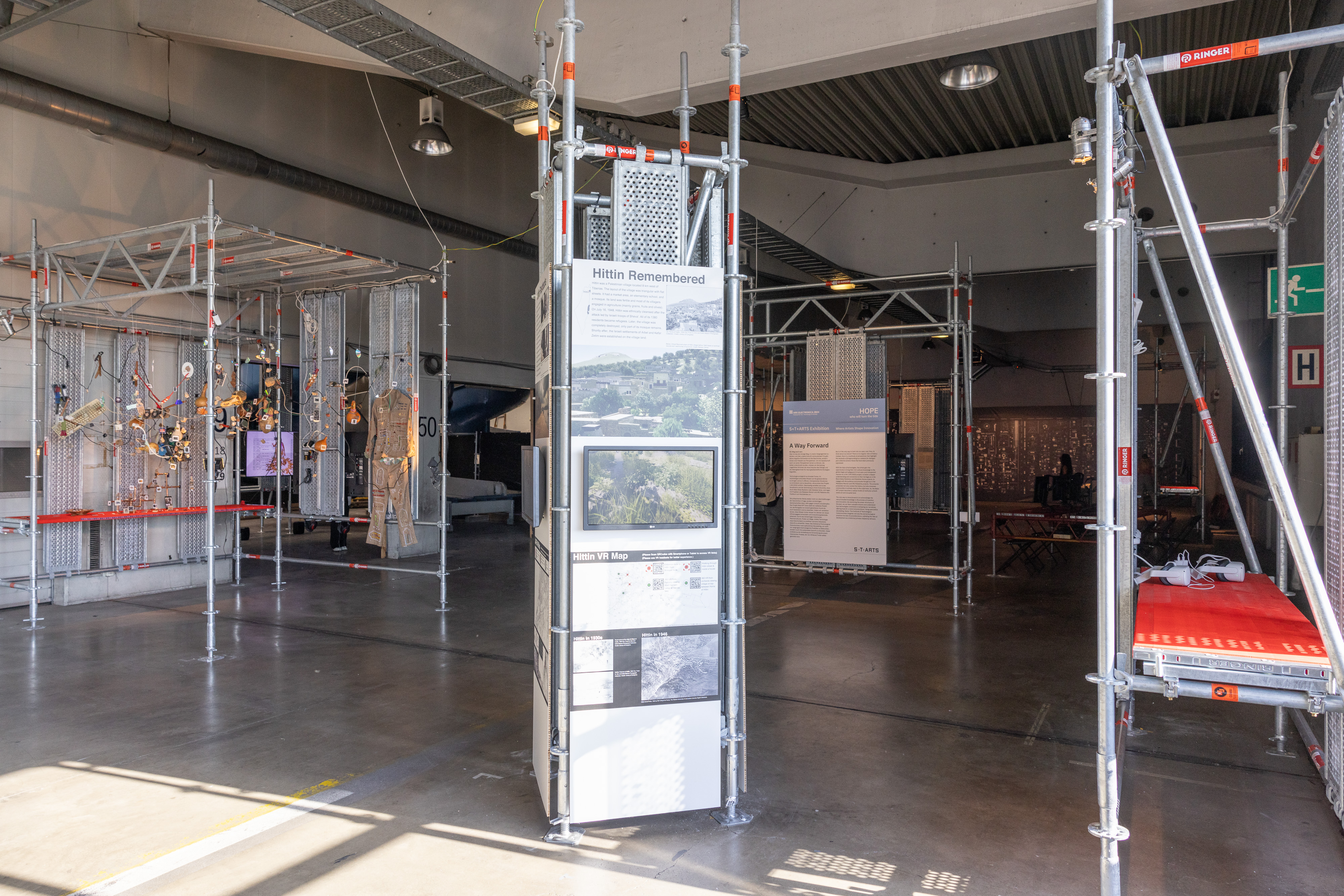
The VRJ Palestine architectural environments and immersive models were formally deployed and exhibited at the physical S+T+ARTS Exhibition platform in Linz, Austria, from September 4 to September 8, 2024.
Biennial Architectural Deployments
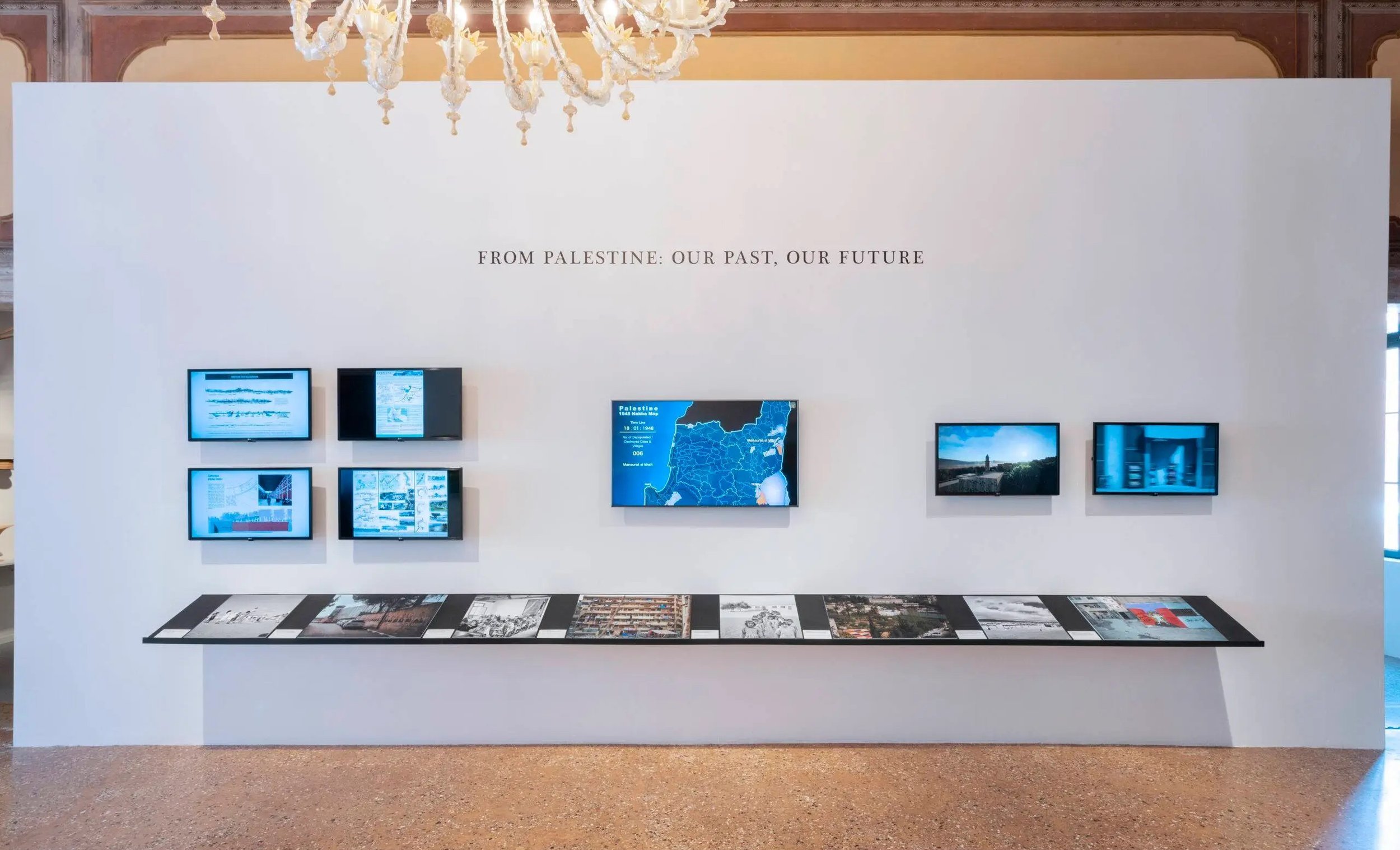
“From Palestine: Our Past, Our Future”
Featured inside the high-profile architectural layout of the European Cultural Centre (ECC) during the Venice Architecture Biennial’s Time Space Existence forum.
The spatial documentation map traced geographic transformations dynamically, asserting permanent cartographic realities over structural displacement across a six-month continuous public installation.
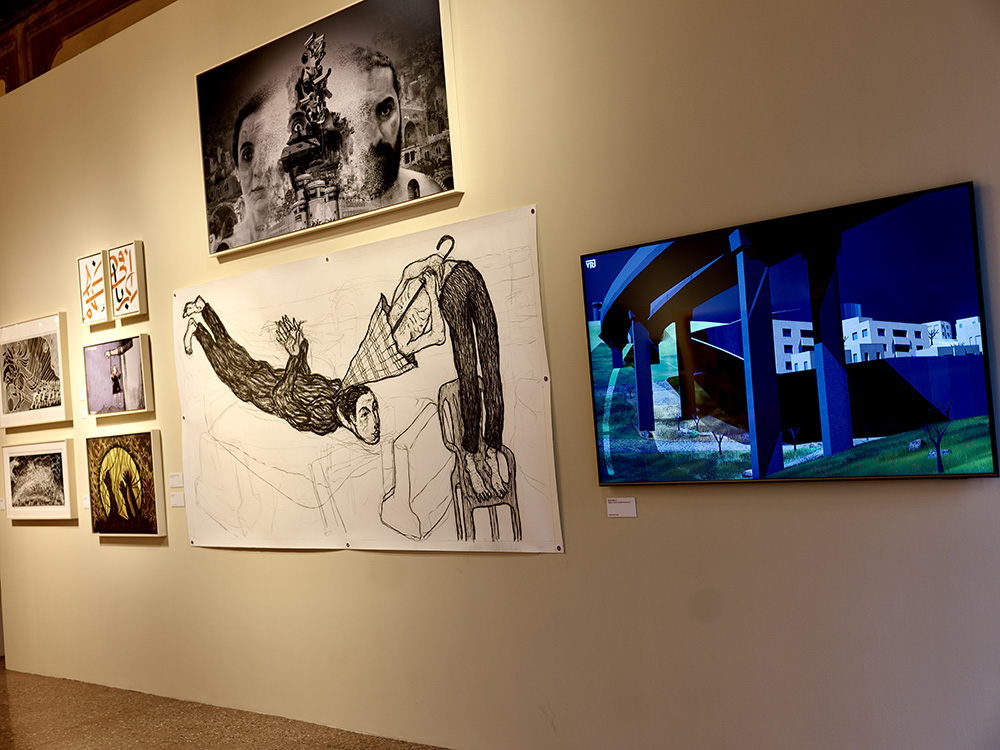
“Foreigners in their Homeland”
Hosted formally at the historic Palazzo Mora complex by the European Cultural Centre, running through November 24th, 2024.
This layout countered institutional fragmentation by framing internal enclaves as systemic networks. The exhibition used precise spatial design elements to capture the structural realities of a dissected native landscape.
Virtual Spaces & Digital Galleries
Galeria Xplora Spatial Exhibition
By utilizing fully navigateable digital environments, the VRJ Palestine architectural assets were deployed inside the custom interactive halls of Galeria Xplora.
This deployment allows global users to break through geographical blockades and traditional museum boundaries, exploring the forensic models inside an interconnected, permanent cloud-rendered ecosystem.
Enter Virtual Exhibition Room ↗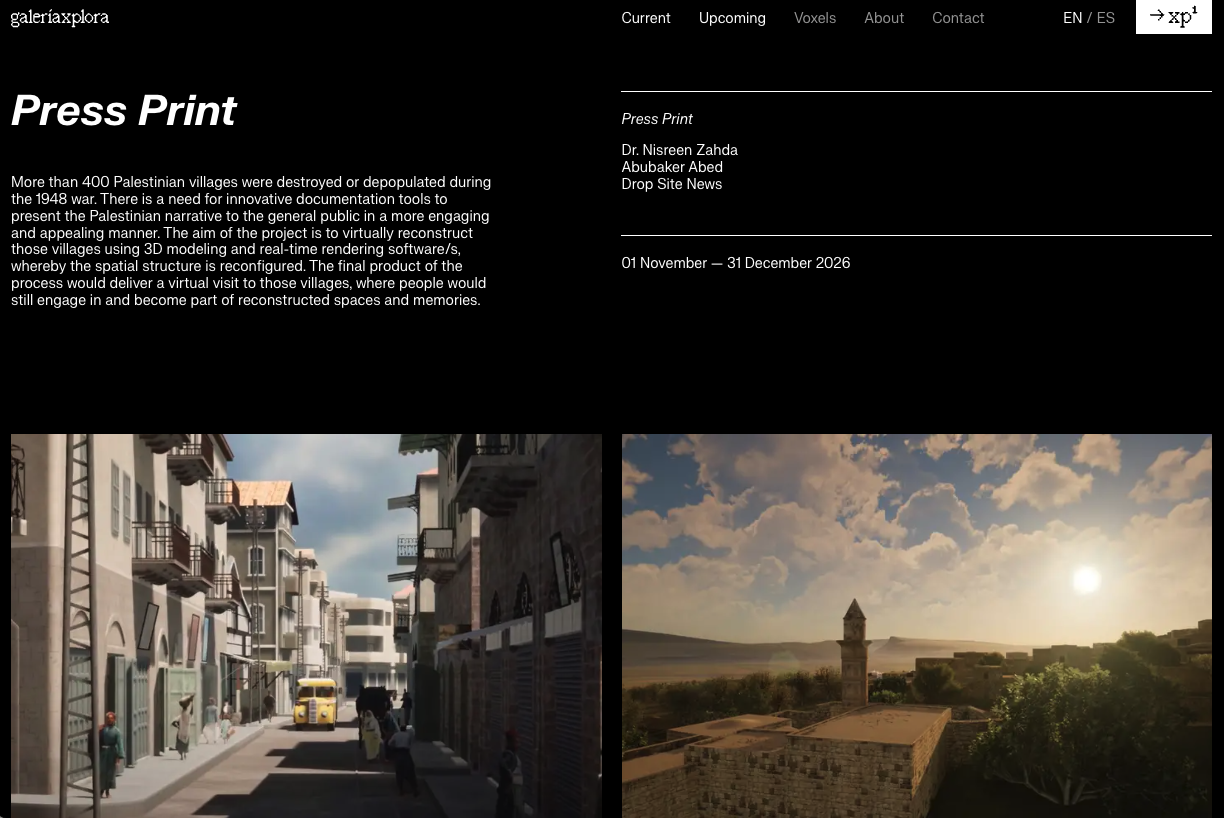
Published Literature & Symposiums
Virtual Reconstruction of the Lost Palestinian Place
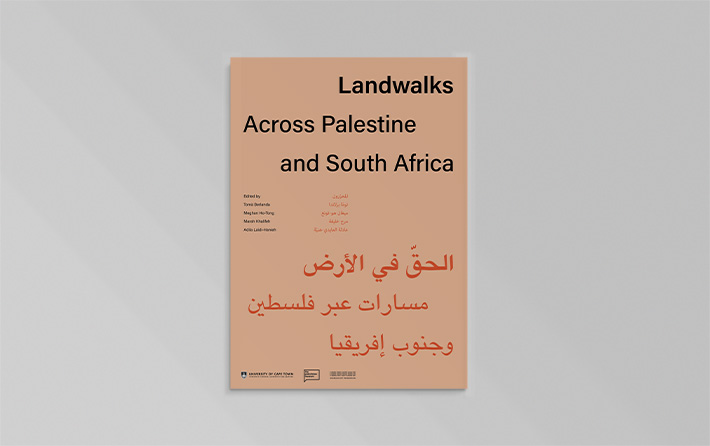
This paper documents the spatial methodologies used to rebuild erased geographies, functioning as an official contribution to Landwalks: Across Palestine and South Africa.
The initiative is an ongoing, cross-continental creative research collaboration executed jointly between The Palestinian Museum and the School of Architecture at the University of Cape Town. By pairing architectural analysis with oral histories, the project investigates shared realities of spatial segregation, border regimes, and systemic land displacement.